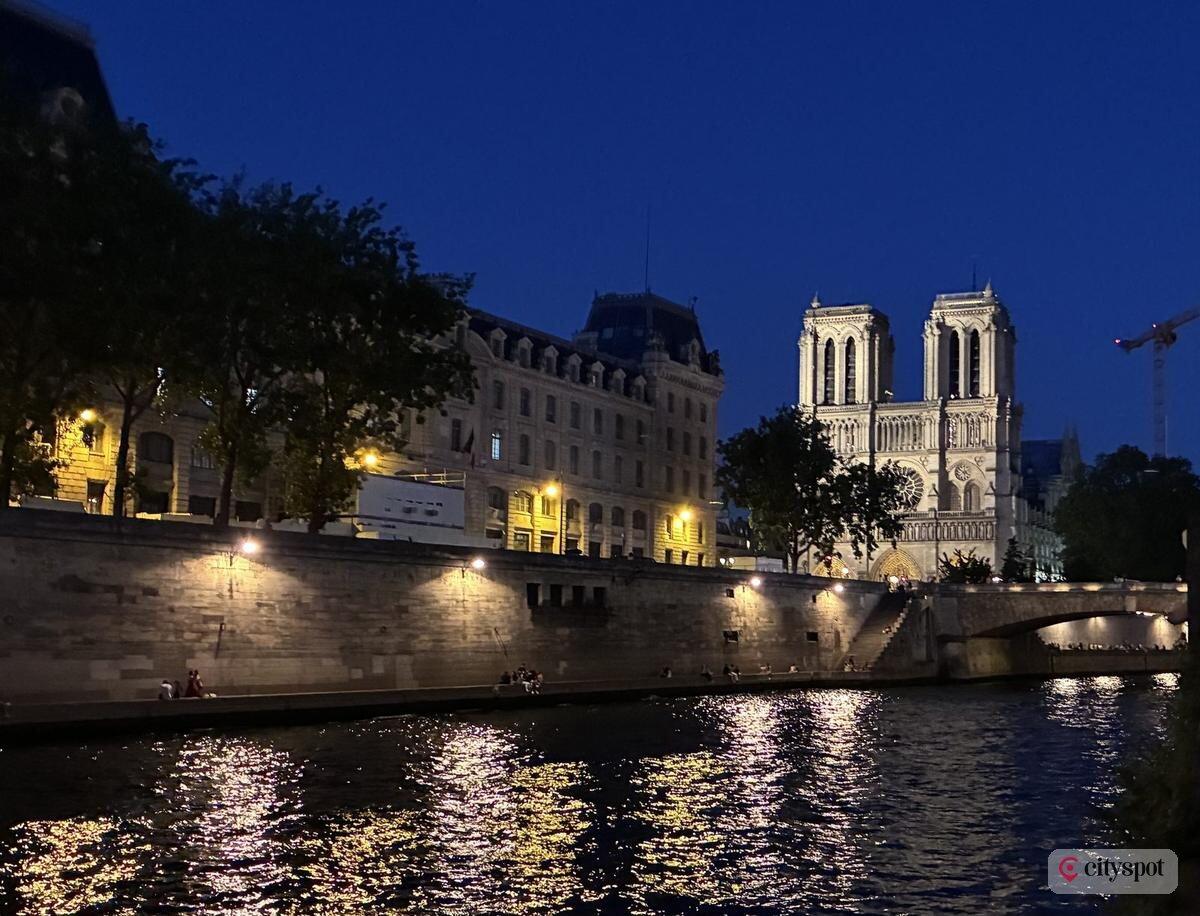
Notre-Dame Cathedral seen from the Seine — Photo: property of CitySpot
Heart of Paris · 1st & 4th arrondissements
Île de la Cité & Île Saint-Louis: Where Paris Began, on Two Small Islands
The Île de la Cité is where Paris began: a Celtic settlement, then the Roman city of Lutetia, then the royal and religious heart of medieval France. Notre-Dame cathedral was built over nearly two centuries starting in 1163. Next door, the Île Saint-Louis was two marshy islets until a 17th-century property developer joined and built them up as an elegant residential neighborhood that has barely changed since, its grand stone townhouses still lining the same quiet quays.
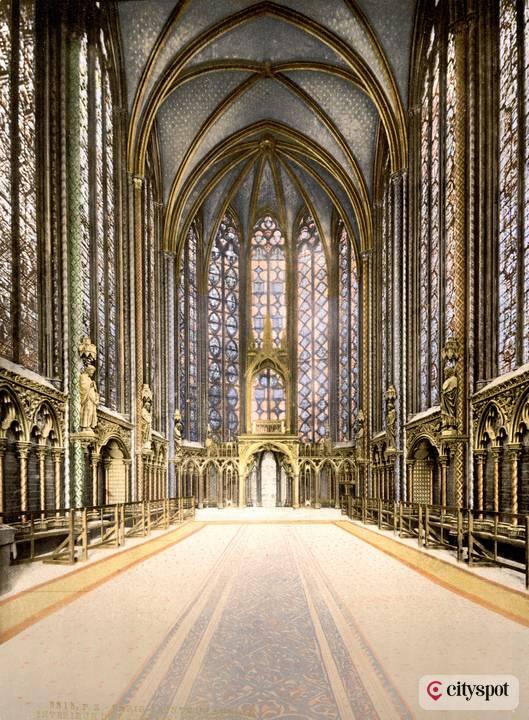
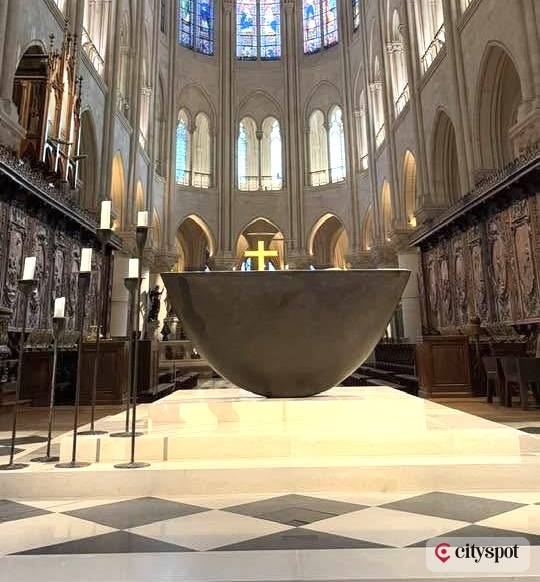
Visit Notre-Dame, reopened in December 2024 after the 2019 fire and its painstaking restoration, and the stained-glass jewel box of Sainte-Chapelle, built by Louis IX to house what he believed was Christ's Crown of Thorns. See the flower market at Place Louis-Lépine, then cross to the Île Saint-Louis to queue, as everyone does, for Berthillon ice cream, a neighborhood institution since 1954 and still, by most accounts, the best in the city.
On the Île de la Cité, boulevard du Palais is lined with the Sainte-Chapelle (no. 10) and the Conciergerie (no. 2), while medieval rue Chanoinesse and the triangular Place Dauphine are quieter corners. The Marché aux Fleurs and, at the island's western tip, the Square du Vert-Galant open up views over the Seine. Cross to the Île Saint-Louis and rue Saint-Louis en l'Île, where Berthillon scoops its ice cream at nos. 29–31.
Marie Antoinette was held in the Conciergerie before her execution in 1793, in a cell that visitors can still see today, furnished to evoke her final weeks. On the quieter Île Saint-Louis, the poet Baudelaire once lived in the Hôtel de Lauzun, where in the 1840s he is said to have written, and experimented with hashish, alongside other members of the short-lived "Club des Hashischins."
More from the history books
The island's first known inhabitants were the Parisii, a Gaulish tribe that gave Paris its name; Julius Caesar mentions their settlement, Lutetia, in his account of the year 53 BC. For the next two thousand years the island remained the seat of power, first Roman, then royal and ecclesiastical, until the 19th century, when Baron Haussmann demolished much of its medieval warren of alleys. Tens of thousands of residents were displaced to open up the square in front of Notre-Dame and make room for the Hôtel-Dieu and the Préfecture de Police.
The western tip of the island is anchored by the Pont Neuf, "New Bridge" despite being the oldest standing bridge in Paris. Completed in 1607 under Henri IV, it was the first Paris bridge built without houses along its sides, which gave pedestrians an unobstructed view of the Seine for the first time. A statue of Henri IV, the king who commissioned it, looks out from the middle of the bridge toward the leafy Square du Vert-Galant at the island's point.
3 key numbers
1163 — construction began on Notre-Dame; it took nearly 200 years to complete
Over 1,000 pieces of 13th-century stained glass fill Sainte-Chapelle's upper chapel
1954 — the year Berthillon opened on the Île Saint-Louis, and the queues have barely let up since
We recommend…
- 📍 Notre-Dame Cathedral — 6 parvis Notre-Dame – place Jean-Paul-II · Metro: Cité
- 📍 Sainte-Chapelle — 10 boulevard du Palais · Metro: Cité
- 📍 Conciergerie — 2 boulevard du Palais · Metro: Cité
- 📍 Square du Vert-Galant — Place du Pont-Neuf · Metro: Pont Neuf
- 📍 Berthillon — 29–31 rue Saint-Louis en l'Île · Metro: Pont Marie
Did you know?
- A bronze marker called "Point Zéro" is set into the pavement in front of Notre-Dame — it's the official point from which all road distances in France are measured.
- The Île Saint-Louis has no Metro station of its own; locals consider this a feature, not a flaw, because it keeps the island quiet.
- Sainte-Chapelle was built in under seven years, remarkably fast for a Gothic masterpiece, reportedly because Louis IX was eager to see his holy relics under its roof.

Explore Île de la Cité & Île Saint-Louis with CitySpot
Download the CitySpot app and turn your phone into an audio guide to discover 500 points of interest in Paris, as well as many themed walking tours across the city.